Christian Samurai -Part 2

(Continued from last week’s article)
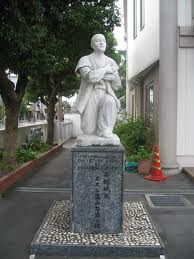
Statue of Ukon Takayama at Takatsuki Church

Ukon was generally liked and trusted by other samurai lords. Shogun Hideyoshi even gave him promotion by granting him more land to own. Shortly after that, however, Hideyoshi issued a decree in 1587 placing restrictions on Christian activities. Missionaries were forced to leave the country within 20 days and it was stated that it was “inappropriate” to convert the Japanese to Christianity because Japan was a country of the gods. This was the first anti-Christian decree that was followed by more severe ones. Many Christian daimyo’s renounced their faith at this, but Ukon surprised others by choosing to abandon his status as a Daimyo and all his land and riches for his faith. Although he was forced to go into exile after that, there were sympathetic Daimyo’s who provided him with a decent living and protection. Some of them even made him a political and military advisor.
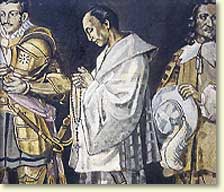
Ukon in his final years during exile in the Philippines

In 1614, with the persecution of Christians becoming as severe as ever, he was finally expelled from the country and boarded on a ship bound for the Philippines. He reached Manila in December and received a hearty welcome by Spanish priests and missionaries who had heard about his perseverance. Exhausted from the travel and the tropical climate he wasn’t used to, Ukon soon became ill in the foreign land and died at the age 64 in Manila the next year. Spanish governor Juan de Silva ordered a huge funeral for Ukon at Santa Ana Cathedral. His family went back to Japan after his death and three families directly descended from Ukon still live in three different parts of Japan today.
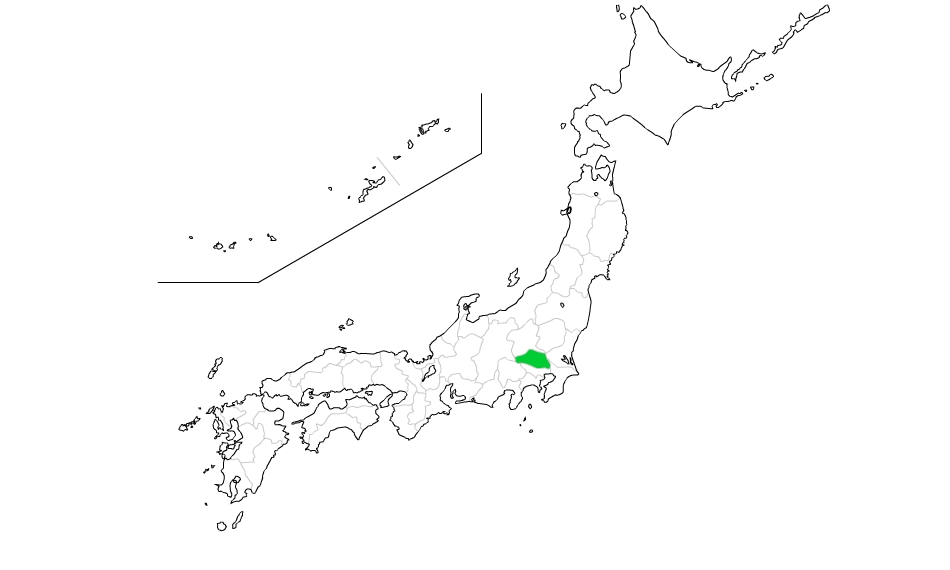
Pray for Saitama

Saitama is a northern neighbor of Tokyo and much of the prefecture is being urbanized, creating the feeling that it is simply an extension of Tokyo.  Moutain farming villages still maintain religious beliefs deeplyrooted in folklore and superstition. On the other hand, many people in the urban areas participate in “new religion” activities.

In 1872, Kyuemon Kojima from Saitama visited Yokohama to sell his silk products and there he heard the gospel from missionary Hepburn. In 1875, he received baptism and brough a number of Bibles back home to open his own home for evangelism. In 1879, the Wato Church, the first church in Saitama, was formed.

<Saitama>

Towns/villages with no churches: 49

Churches/person: 1: 17,946

Average church attendance: 35

Sep 27: The planting of new churches is scarcely keeping up with the rapid population growth. Pray that Saitama churches will catch the vision for aggressive church planting. Pray that as the churches grow, their vision for evangelism will also increase.

Sep 28: Television Saitama broadcast Life Line (Sat. 8am), Harvest Time (Sat 8:30am), and Invitation to Happiness. Pray for salvation decisions and effective follow-up.

Sep 29: Oer 6,600 students are attending Seibo Gakuen, Urawa Lutheran Gakuin, Sei Gakuin ad Rikkyo Gakuin. May each student experience the meaning of grace and lordship.

Sep 30: Omiya Central General Hospital with 266 beds. The home page for the two Kiamoto City clinics, Gospel Clinic and the South Gospel Clinic shares a clear gospel testimony.

Oct 1: “I will obey your word” (Psalm 119:17). May the Christians of Saitama be revived and obey His Word today.

Oct 2: The cities of Hasuda and Hatogaya have only one church each. There are 27 towns and villages with no church. washimiya, Matsubushi, Kamisato, Kawajima, Menuma, and Yoshimi are the largest of these.

*All information and prayer requests taken from “Operation Japan -Prayer Guide- Third Edition” -Japan Evangelical Missionary Association, 2005. To purchase a copy of “Operation Japan” book or the Interactive CD version, go to: http://www.jema.org/joomla15/index.php?option=com_banners&task=click&bid=10.

Christian Samurai -Part 1

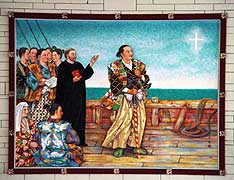
Since Francis Xavier first arrived in Japan as a Jesuit missionary in 1549, more Catholic missionaries followed and many Japanese converted into Christianity. Among them were many Daimyo’s, or powerful Samurai lords. This is partly because Xavier and other missionaries strategically focused on first converting the Daimyo’s in order to pave a smooth path for further ministry. And many Daimyo’s felt that it was beneficial for them to be a convert in order to gain favor with the Portuguese and Spaniard merchants who brought guns. Many of those who converted for commercial benefits soon fell away from Christianity once persecution got severe, but there were a few samurai lords who adhered to their faith throughout the persecution.

One of these “hard-core” Christian samurai’s is Ukon Takayama. He was born to a high-class Samurai family in Osaka area in 1552. His father, touched by the gospel message he heard from a former Buddhist monk who converted to Christianity after being ministered by a Jesuit missionary, became a Christian and led everyone in his family to be baptized. Ukon was 12 years old when he got baptized. In 1573, in the midst of political turmoil that involved the Takayama family and the Daimyo that they served, Ukon and his father took over Takatsuki castle and became Daimyo themselves. Ukon was seriously injured during a sword fight with the former lord of the castle, but miraculously recovered. It is said that Ukon, who was not as fervent about his faith as his father, became a very dedicated follower since this incident. His father retired around the age 50 to pursue a Christian living and Ukon became Daimyo at Takatsuki castle…. (To be continued next Thursday)

Music Ministry

The Sambika (hymnal) was published in 1954 and the Sambika 21 in 1997. These hymnals contain many of the high-church worship songs. The Seika was first published in 1958 and was recently updated as the New Seika. It includes more praise songs, as well as some newer Japanese hymns. In addition to these two standard hymnals, many praise and worship books are being published, with a growing number of original praise songs being written by Japanese.

Outside the church, Christian music has opened up two doors of opportunity. One is through the classics with Bach; the other is centered in a Black Gospel music boom. Classical music of the church, such as Handel’s Messiah and Beethoven’s Ninth Symhony, has always been popular in Japan, but recently there has been an increased interest in Bach and his Christian message. Also the popularity of Black Gospel music has birthed gospel choirs all over Japan. The Halleluja Gospel Family is a growing network of about 20 gospel choirs with over 500 members (80% non-Christian).

Sep 20: Pray for Christian musicians who serve as soloists and instrumentalists, and for the many groups, choirs, bands and orchestras. Pray that many more will dedicate themselves to music ministries. The Evangelium Cantrai serves churches through concerts they conduct throughout the country. They also seek to introduce biblically-based music in the churches.

Sep 21: The Euodia Ensemble seeks to spread the sweet aroma of Christ through their music ministry. Recording uses music as a tool for evangelism by sponsoring concerts, music seminars, music production and sales.

Sep 22: Tokyo Christian Choir is a Christian group that receives training and performs for special concerts, such as presentations of The Messiah at Christmas.

Sep 23: Word of Life Press Ministries’ Life Productions diision produces recordings by Japanese Christian musicians, administers the Living Praise song book and sponsers evangelistic concerts.

Sep 24: Pray for the many Japanese studying classical Christian music, and for those who are learning Black Gospel from Christian teachers. Pray that their eyes will be opened.

Sep 25: The purpose of Christians in the Arts Network (CAN) is to encourage, connect, equip and mobilize musicians (and artists of all genres) to be creative leaders of a moement turning people to the worship of Jesus Christ in Japan and beyond. CAN’s projects include an annual Worship Seminar, “Alleluia Seminars” for local churches and Cristian Leadership Training Center.

*All information and prayer requests taken from “Operation Japan -Prayer Guide- Third Edition” -Japan Evangelical Missionary Association, 2005. To purchase a copy of “Operation Japan” book or the Interactive CD version, go to: http://www.jema.org/joomla15/index.php?option=com_banners&task=click&bid=10.

First missionary to Japan -Part 2

(Continued from the article on Sep. 9)

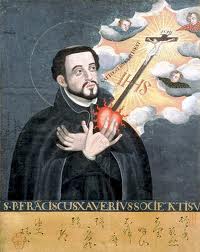
Francisco de Xavier, the first Christian missionary to Japan, encountered many difficulties including language barrier and cultural issues. Since Japanese culture didn’t have a concept of God who is the only God and the Creator, the language didn’t have a word for such a being. His interpreter Anjiro, who was still quite new to this foreign faith, translated the word “God” into “Dainichi”, which is a Buddhist figure. Because of this, Xavier was at first welcomed by some of the Buddhist monks who thought he was teaching about Dainichi. Xavier soon realized this and started using “Deusu” from the Latin “Deus (God)”, which made the monks less welcoming toward Christianity.

Another difficulty arose when Xavier met with one of the local lords in Yamaguchi area to ask for permission to evangelize in the area. He was unable to gain favor with the lord O’ouchi because Xavier criticized O’ouchi’s homosexual practices. This problem hindered his work of ministry elsewhere as well, because homosexuality or pederasty among high-class men was widely accepted in pre-modern Japan. The concept of hell and eternal damnation also presented a difficulty for Japanese people, who were deeply bothered by the idea that their ancestors were in hell.  

After Xavier first stepped on Japanese soil in 1549, many Catholic missionaries followed. However, the Japanese government started to regulate and limit Christian missionary activities from 1587 and the persecution gradually worsened. In 1613, all Christian activities were completely banned all over Japan. The persecution continued to a greater or lesser degree until 1899 when the government officially permitted Christianity.

September Newsletter Posted!

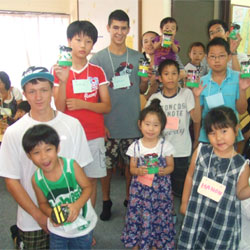
In this edition Tomo’s church in Japan teams up with some high school students at our church (including Dave’s little brother Sam) to host a summer English camp, and fellow missionaries and family Jon (Dave’s brother) and his wife Maki (Tomo’s sister) come to the US for home service.

Joy English Club!

by David Robison
Sam helps run a VBS in Japan
One of the most difficult problems the Japanese church faces in growing is simply getting people through the front door. Japanese people tend to look at Christianity with suspicion, seeing it as a foreign or western institution. Very few would be comfortable visiting a church. However when Tomo’s church, and the team my younger brother was a part of partnered together to host a “Joy English Club” at the church, the result was that dozens of children and their parents came into the church and heard about Christ.Read more…

Jon, Maki and Baby Aquila

by Tomo Robison
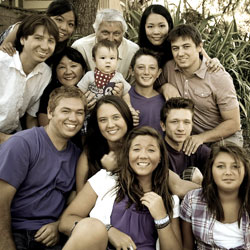
The entire Robison Family in one place.
As many of you already know,David’s younger brother, Jon is married to Tomo’s older sister, Maki. We all met at the same time when David and Jon came to Japan for the first time in 2003 and stayed at Maki and Tomo’s house for 6 weeks. Jon and Maki got married about a year before we did. Now we’re all part of the Robison clan and we’re all very happy about it. Read More…

Pray for Gumma

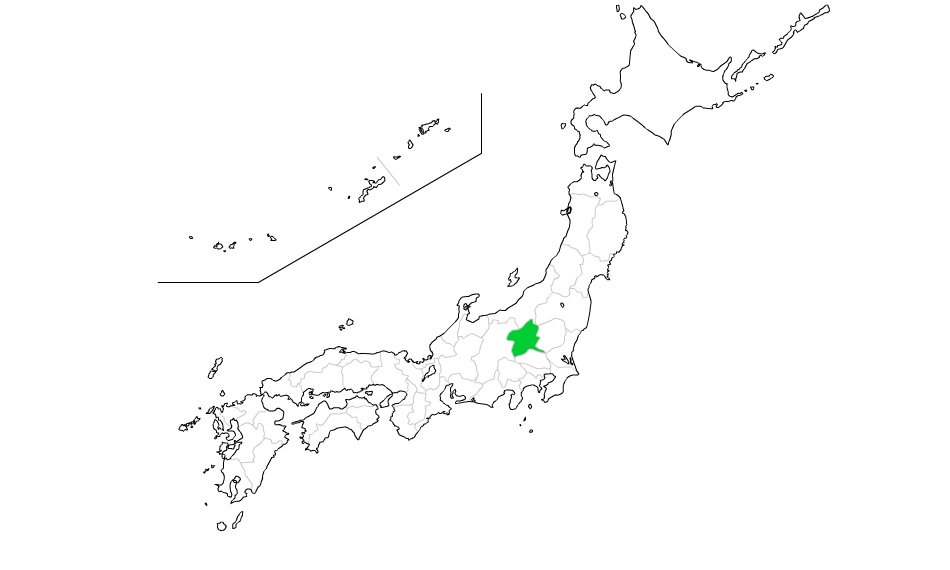
Gumma is a mountainous prefecture in north-west Kanto area. It is the nation’s highest producer of silk thread, and many towns in the southern section of the prefecture are becoming centers for electronic and chemical industries. In 1874, Jo Niijima, the founder of Doshisha University, returned from the USA and began teaching Christianity in his hometown, Annaka, in Gumma. The Annaka Church was established in 1878. Kanzo Uchimura, another Christian leader at the time, was born in Gumma as well.

<Gumma>

Towns/villages with no churches: 33

Churches/person: 1: 16,998

Average church attendance: 28

Sep 13: Both Life Line and Harvest Time TV programs are available here. Pray that whole families will become Christian through these ministries.

Sep 14: More than five camping and retreat centers are ministering here. Many churches from the surrounding prefectures and Tokyo benefit from these facilites. May the Holy Spirit refresh and fill each Christian who comes to these facilities.

Sep 15: Over 5000 children and young people are attending Christian schools and kindergartens. For most of them this is their first and primary contact with Christianity. Pray for open hearts.

Sep 16: “The Son is the radiance of God’s gloy and the exact representation of his being” (Hebrews 1:3). Pray for the people of Gumma to recognize that Jesus is the Son of the living God.

Sep 17: Orphanages: Jomo Airin-sha Chigyo Home and Komochi Yama School with 56 children. Maebashi Home for Mothers & Children with 20 families. Pray for the several welfare facilities ministering to the elderly.

Sep 18: There are 33 towns and villages with no churches. Niita-gun has no churches and includes Kasakake with 27,461 people. What a needy area!

*All information and prayer requests taken from “Operation Japan -Prayer Guide- Third Edition” -Japan Evangelical Missionary Association, 2005. To purchase a copy of “Operation Japan” book or the Interactive CD version, go to: http://www.jema.org/joomla15/index.php?option=com_banners&task=click&bid=10.

First missionary to Japan -Part 1

How long has Christianity been in Japan? Even though Christian population in Japan today still lingers around 1%, Japanese people have been exposed to Christian teachings since as early as 1549.

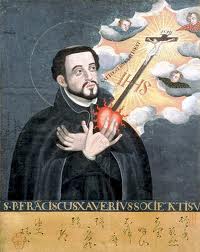
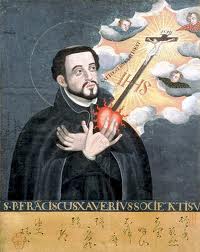
The first Christian missionary to come to Japan was Francisco de Xavier, or Francis Xavier, who was a Spanish missionary and one of the founders of the Society of Jesus along with Ignatius de Loyola. He was born in the Kingdom of Navvare (Spain) and it is thought that his first language was Basque. He left Lisbon in 1541 on his missionary trip to Asia under the order of King John the 3rd of Portugal. He first went to Goa, a Portuguese colony in India, where he spent 3 years. He then did his missionary work in other parts of India and Indonesia. In 1547, he met a Japanese named Anjiro in the Malacca islands, who told him about Japan and later got baptized. Intrigued by Anjiro’s stories, Xavier left India and reached the western part of Japan in 1549, accompanied by Anjiro and two other Jesuits. He struggled to learn the Japanese language which was radically different than any other languages that the Europeans had encountered before, and his ministry was limited because of that. His primary means of teaching was to read the Japanese translation of cathechism aloud and he also brought many pieces of artwork such as paintings of the Madonna as complementary resources to teach about Christianity to the Japanese. He spent two years in Japan before returning to India.

Pray for Tochigi

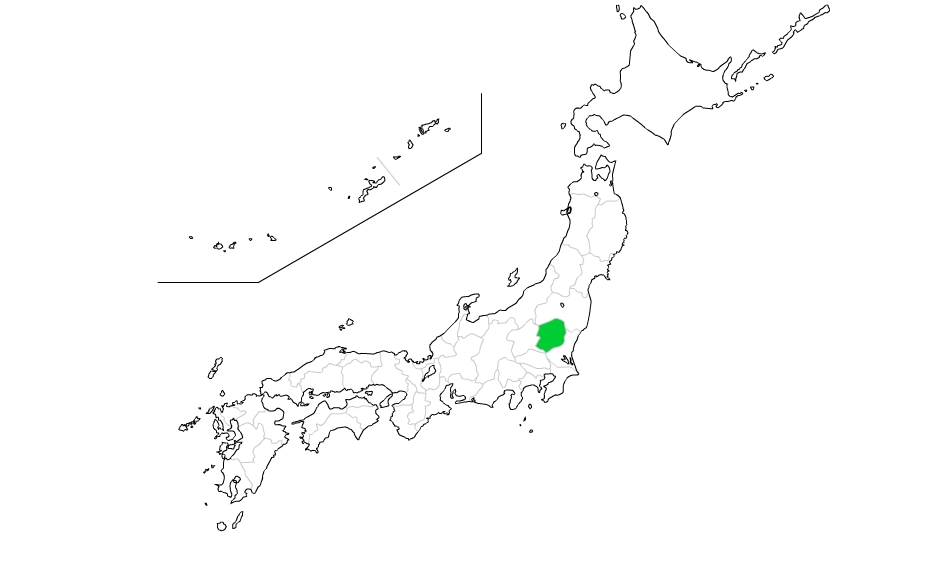
Tochigi (marked below in the map) is another prefecture in Kanto area. It is famous for hot springs and beautiful scenic spots. Agriculture is the main industry in Tochigi, and people are known to be conservatie, modest, rather non-confrontive, and have a relatively strick ethical code. In 1873 the prohibition against Christianity was removed, and preaching points were established the next year at Utsunomiya and Nikko, resulting in Utsunomiya Church being established in 1885.

<Tochigi>

  • Towns/villages with no church: 37
  • Churches/person: 1:18,931
  • Average church attendance: 26


Sep 6: Pray that today someone will meet Jesus through these radio broadcasts: Walking with Jesus, Joyful Good News, and Path to Zion broadcasts.

Sep 7: Missionary training center has up to 40 Japanese missionaries preparing for cross-cultural ministries around the world. Asia Gakuin (Asia Rural Institute) trains missionaries for rural areas. Often up to 35 people are in training at one time.

Sep 8: At least 12 Protestand kindergartens and four day-care centers are sharing the gospel with close to 2,000 children and their families.

Sep 9: Approximately 50 people regularly train at the Child Evangelism School. Pray God’s blessing on the literature ministry of Christian Book Center and the Logos Book Center, and on the 286 bed Hiki Hospital as the staff witnesses and provides a chapel ministry.

Sep 10: Over 200 people every day are being touched by Christian staff in facilities ministering to the handicapped and elderly of Tochigi prefecture. Pray for special strength for the staff and their effective witness.

Sep 11: Praise God that the number of churches, members, attendance, baptisms and SS all improved. Pray for the towns of Tanuma (29,413) and Ishibashi (20,380) with no churches and Moka and Otawara (each with over 50,000) with only one church.

*All information and prayer requests taken from “Operation Japan -Prayer Guide- Third Edition” -Japan Evangelical Missionary Association, 2005. To purchase a copy of “Operation Japan” book or the Interactive CD version, go to: http://www.jema.org/joomla15/index.php?option=com_banners&task=click&bid=10.